
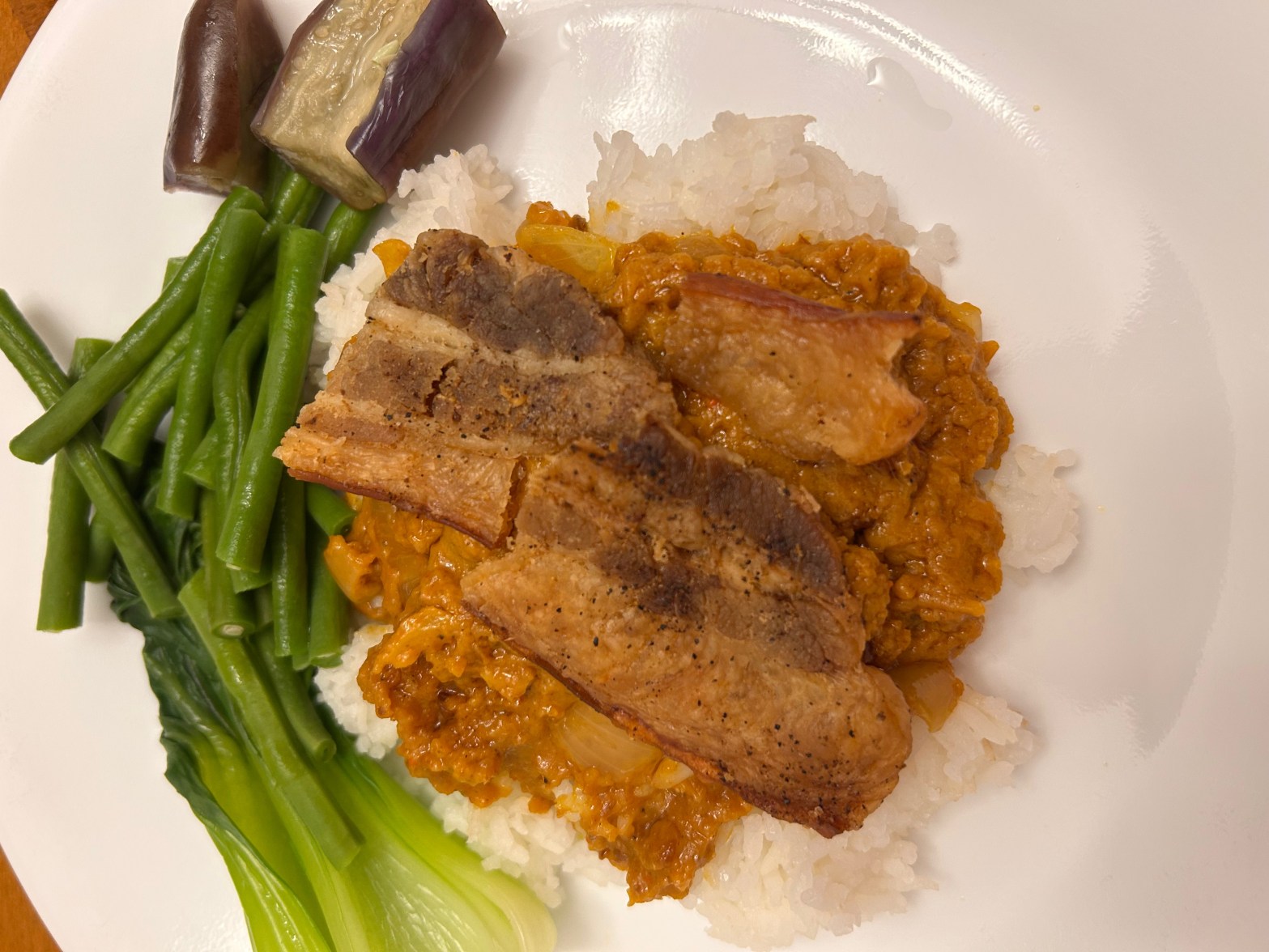
Kare-Kare is a classic Filipino stew celebrated for its rich peanut sauce, tender meat, and fresh vegetables. Have you ever wondered how to cook Kare-Kare at home? This easy guide will help you prepare an authentic dish. It is perfect for family meals, special occasions, or simply exploring Filipino cuisine. This dish is always a hit whenever I serve it at Filipino gatherings — comforting, flavorful, and unforgettable.
What You’ll Find in This Blog Post:
- What is Kare-Kare?
- Kare-Kare Ingredients
- Step-by-step Kare-Kare Recipe
- Tips for Cooking the Best Kare-Kare
- Popular Variations
Let’s get started!
What is Kare-Kare?
Kare-Kare is a beloved Filipino peanut stew. It is traditionally made with oxtail, tripe, or beef shank. The stew is served with vegetables like eggplant, string beans, and bok choy. Its signature is the thick, savory peanut sauce, made from ground peanuts or peanut butter.
It’s always served with bagoong alamang (shrimp paste), adding a salty contrast to the rich sauce. For convenience, I often use beef sirloin tip roast. Pork belly also provides amazing flavor and texture.
Kare-Kare Ingredients
For the Stew:
- 2 lbs oxtail (or substitute with beef shank, pork hocks, beef sirloin, or pork belly – see cooking instructions below)
- 1 cup peanut butter (or 1 cup ground roasted peanuts)
- 1 tbsp annatto (achuete) seeds or 1 tbsp ground annatto powder (for color)
- 3 cups water or beef broth [ 1 cup + 2 cups]
- 1 onion, chopped
- 4 cloves garlic, minced
- 1 tbsp ground rice (optional, to thicken the sauce)
- 2 tbsp bagoong alamang
- Salt and pepper to taste
Vegetables:
- 1 medium eggplant, sliced
- 1 bunch string beans, cut into 2-inch pieces
- 1 bunch bok choy (or pechay)
- 1 banana heart (optional, for a traditional touch)
Condiment:
- Bagoong alamang (shrimp paste) – essential for serving
How to Cook Kare-Kare: Step-by-Step Instructions
1. Prepare the Meat
Option 1: Oxtail, Beef Shank, Pork Hocks, or Sirloin Tip Roast
- Boil meat in water until tender (around 2–3 hours), or use a pressure cooker for faster results. Skim off impurities while boiling for a clear broth. OR
- In an Instant Pot: Sauté garlic and onions, brown the meat, then switch to ‘Meat/Stew’ mode for 40 minutes. No need to add water — the meat will release its own juices.
Option 2: Pork Belly (Make Ahead for Crispy Texture)
- Boil pork belly in water until tender (about 45 minutes). Let it cool completely.
- Refrigerate overnight to firm up the meat and fat.
- The next day, bake in the oven at 350°F (175°C) for 20–30 minutes until the skin crisps up.
- Once cooked, slice the pork belly into fan-shaped pieces. This ensures even portions and a beautiful presentation. Add these slices on top of the stew in Step 4.
2. Make Annatto (Achuete) Oil
- Soak annatto seeds in warm oil for 5 minutes (or use annatto powder).
- Strain and set aside the vibrant red-orange oil.
3. Sauté Aromatics
- In a large pot, sauté garlic and onions in annatto oil until fragrant.
4. Add Peanut Sauce
- Add peanut butter (or ground peanuts) and 1 cup water, mixing well.
- Stir in ground rice (if using) to thicken the sauce, then add 2 cups water
- Simmer until the sauce thickens; season with salt and pepper.
- Add the tender meat and mix in.
- Stir in bagoong alamang for extra depth of flavor.
- Add the baked pork belly on top, if using.
5. Add Vegetables
- Blanch eggplant, string beans, and bok choy separately.
- Add them to the stew just before serving or serve on the side.
6. Serve Kare-Kare
- Serve hot with steamed rice and a side of bagoong alamang.
Kare-Kare Cooking Tips
- Tender meat is key – Use a slow cooker or pressure cooker for best texture and time savings.
- Crispy pork belly tip – Refrigerate before baking for best results.
- Thick, smooth sauce – Adjust with extra peanut butter or simmer longer.
- Balance flavors – Don’t skip the bagoong; it enhances the richness.
Kare-Kare Variations
- Seafood Kare-Kare – Use shrimp, mussels, and squid.
- Vegetarian Kare-Kare – Skip the meat; use tofu and more veggies.
- Instant Pot Kare-Kare – Perfect for quick prep!
Enjoy the Flavors of Filipino Kare-Kare
Cooking Kare-Kare at home is a delicious and rewarding way to bring the flavors of the Philippines to your table. Whether you’re Filipino or exploring international cuisine, this recipe is a fantastic introduction to Filipino cooking.
If you loved this Kare-Kare, share your experience in the comments. Tag us on social media — I’d love to see your creations!
Discover more from Kusina ni Wynonah
Subscribe to get the latest posts sent to your email.
 Kusina ni Wynonah
Leave a comment